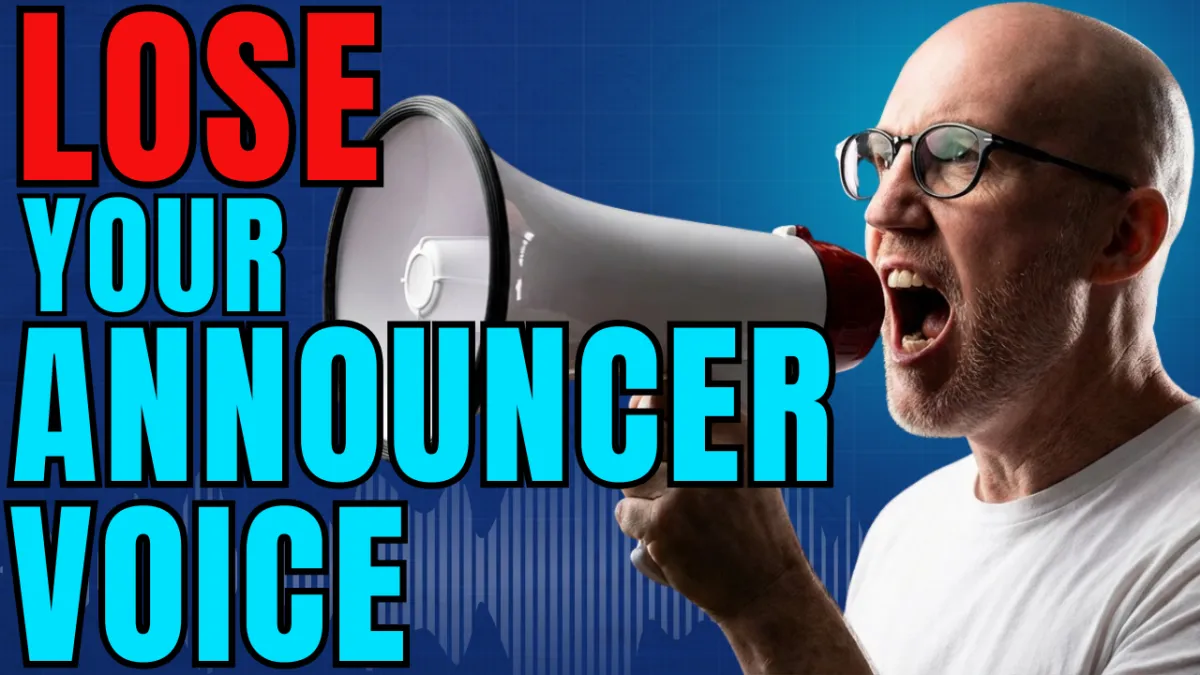
Stop Using Announcer Voice in Voiceover (Sound Natural)
Stop Using Announcer Voice in Voiceover (Sound Natural)
If you’re new to voice over, there’s a good chance you’re doing what almost every beginner does:
You’re using an “announcer voice.”
And no — that’s not a criticism. It’s completely normal.
Most people get into voice over thinking they’re supposed to sound polished, dramatic, and larger than life. Somewhere along the way, we all absorbed the idea that voice actors are supposed to sound like radio DJs or movie trailer announcers.
But here’s the truth:
That style is mostly outdated.
Today’s voiceover industry wants something very different: real people, real conversations, and authentic delivery.
The good news? If you can learn to let go of the announcer voice, you’ll instantly become more believable, more relatable, and ultimately more bookable.
Why Beginners Fall Into “Announcer Mode”
When most people hit the record button for the first time, something shifts mentally. Suddenly it feels like a performance.
You stop sounding like yourself and start sounding like what you think a voice actor should sound like.
That usually leads to:
Over-projecting
Over-pronouncing every word
Adding fake energy
Speaking in an unnatural rhythm
Trying to sound “professional”
The problem is that modern voiceover doesn’t reward that style anymore.
In fact, many audition directions specifically say:
“No announcer reads.”
Casting directors want conversational. They want believable. They want someone who sounds like an actual person talking to another actual person.
The Industry Has Changed
Years ago, the classic announcer sound worked.
Back in the radio-heavy era of the 80s and 90s, bigger delivery styles were common. Broad projection and polished delivery were expected.
But today’s ads, commercials, and corporate reads are much more intimate.
Modern voice over is built around connection, not performance.
That means your goal isn’t to sound like a “voice actor.”
Your goal is to sound human.
A Simple Exercise to Instantly Sound More Natural
Here’s a quick practice exercise you can start using today.
Take any piece of copy — a commercial, a paragraph from a book, or even something you find online.
Now imagine you’re speaking to just one person.
Not a crowd.
Not an audience.
One person sitting six inches in front of you.
That mental shift changes everything.
When you do this:
Your volume naturally lowers
Your pacing slows down
Your delivery becomes more personal
You stop projecting
You sound more conversational
A great trick is to literally imagine an ear directly in front of your face and speak into it naturally.
That alone can dramatically reduce the announcer sound.
1. Stop Treating Voice Over Like a Performance
This is one of the biggest mindset shifts new voice actors need to make.
Yes, voice over involves acting.
But that doesn’t mean you need to “put on a voice.”
The more you try to sound like someone else, the less believable you become.
Ironically, the voice that books the most work is usually the most authentic version of you.
The best reads often feel effortless and conversational — almost like the person wasn’t trying at all.
2. Stop Mimicking Old-School Commercials
Many beginners unintentionally copy the styles they grew up hearing:
Movie trailers
Radio promos
TV announcers
Big energy commercials
The problem is that most modern VO opportunities are moving in the opposite direction.
Today’s clients typically ask for:
Conversational
Real
Natural
Friendly
Authentic
That classic “voiceover voice” only gets requested occasionally now.
For most auditions, sounding too polished can actually hurt your chances.
3. Practice Without Headphones
This is a simple but powerful trick.
When you hear your own voice loudly in your headphones while speaking, you become hyper-aware of yourself. That often causes you to over-control your delivery.
Instead, try practicing without headphones.
You’ll likely:
Relax more
Speak more naturally
Stop monitoring every syllable
Focus more on communication instead of performance
You can still wear headphones when recording if needed, but for practice sessions, removing them can help you break the announcer habit.
4. Stop Projecting
Most beginners talk like they’re trying to reach the back row of a theater.
But voice over today is usually intimate.
You’re not speaking to a stadium.
You’re speaking to one person.
Imagine someone sitting right beside you and deliver the copy at that level.
The less you “push,” the more believable you’ll sound.
5. Don’t Over-Pronounce Every Word
New voice actors often become obsessed with perfect diction.
Every syllable becomes over-enunciated.
Every word becomes overly polished.
But real people don’t talk that way.
Natural speech includes:
Small imperfections
Casual rhythms
Relaxed pronunciation
Organic pacing
Your goal is clarity — not perfection.
6. Pull Back the Energy
One of the most common beginner mistakes is assuming every read needs more energy.
Sometimes high-energy reads are appropriate.
But most conversational copy actually improves when you do less.
Less forcing.
Less performing.
Less effort.
In voice over, less is often more.
Many casting directors respond better to reads that feel relaxed and genuine than reads that feel “acted.”
Focus on Emotion Instead of Technique
Instead of obsessing over:
pacing
diction
volume
technical perfection
Shift your attention toward:
who you’re talking to
why you’re saying the words
what emotion is behind the message
That emotional connection is what creates believable reads.
Three Simple Tips for More Natural Reads
1. Talk to One Person
Never imagine a crowd. Picture one individual.
2. Emphasize Emotional Words
Highlight words naturally based on emotion, just like real conversation.
3. Let the Copy Affect You
Allow pauses, reactions, and emphasis to happen organically instead of forcing them.
The Bottom Line
You do not need an “announcer voice” to succeed in voice over.
In fact, losing it may be one of the best things you can do for your career.
The more authentic you sound, the more relatable you become — and that often leads to more auditions, more bookings, and more opportunities.
Remember:
Less effort often sounds better
Real beats polished
Conversational beats performative
Your natural voice is enough
You just need to learn how to use it the right way.
Ready to take the next step? I'm hosting a free 1-hour webinar this Tuesday night at 6:00 PM Pacific / 9:00 PM Eastern where I'll go deeper into everything it takes to start a voice acting career from home—including how to land your first gigs with little to no upfront cost. Plus, everyone who shows up gets a free copy of my book, The Voiceover Blueprint (audiobook and ebook). Sign up using this link.
Download My Latest Beginner Mistakes in Voice Over - Quick Start! https://thevoiceoverblueprint.com/beginner-mistakes
Discover the Voice Over Blueprint™: https://thevoiceoverblueprint.com/vobp
The content on this channel is for educational and informational purposes only. While I share tips, strategies, and guidance based on my experience as a professional voice actor, there is no guarantee of earning income or securing voiceover work by using the information provided. Results vary depending on individual effort, skill level, market conditions, and other factors. Viewers should use their own judgment and take personal responsibility for their voiceover career decisions.

