

Voice Over Content Hub
Welcome to the content hub.
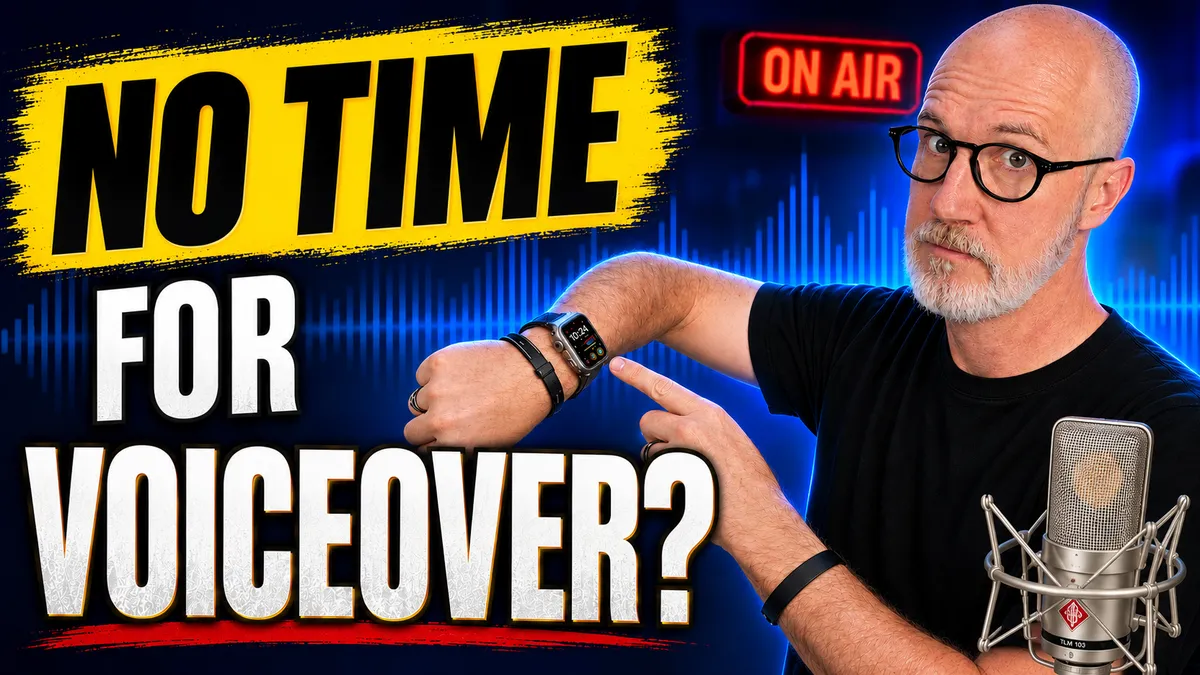
How to Do Voiceover with a Full-Time Job
How to Do Voiceover with a Full-Time Job
Can You Do Voiceover Part-Time With a Full-Time Job?
One of the questions I hear most often from people interested in voiceover is:
“How am I supposed to fit this in when I already have a full-time job?”
And honestly, it’s not just the job.
There’s family. Kids. Soccer practice. Errands. Housework. Appointments. Weekends that somehow disappear before they even begin.
Life is busy.
So when someone starts thinking about becoming a voice actor, it’s understandable to wonder where they’re supposed to find another 20, 30 or 40 hours a week to build a voiceover business.
Here’s the good news:
You probably don’t need nearly as much time as you think.
Let’s bust a few myths about how much time voiceover actually takes—especially if you’re starting on a part-time basis.
Most Voice Actors Don't Start Full-Time
Most people getting into voiceover aren't quitting their jobs on Friday and becoming full-time voice actors on Monday.
They start small.
Maybe they have a full-time job and want to build something on the side. Maybe they're retired or semi-retired and looking for supplemental income. Maybe they're raising a family and only have a few hours each week available.
Whatever your situation, there's nothing wrong with starting voiceover part-time.
In fact, it can be a very practical way to do it.
You can learn the business, develop your skills and gradually increase your income without immediately depending on voiceover to pay the mortgage.
Yes, It Takes More Time in the Beginning
There's something important to understand about starting a voiceover business:
The beginning usually takes more time than the actual work will later.
That's because you're learning.
You need to learn how to record. You need to learn basic audio editing and processing. You need to figure out your recording space. You need to develop your performance skills. Eventually, you'll need to learn how to audition, market yourself and work with clients.
Things that might take you 30 minutes when you're starting could eventually take you five minutes.
That's completely normal.
The more you do it, the faster you become.
What If I Only Have a Couple Hours a Week?
You can still make progress.
You simply need to adjust your expectations.
Someone who can dedicate 20 hours a week to learning and building a voiceover business is probably going to move faster than someone who has one or two hours available.
That doesn't mean the person with two hours can't do it.
Their runway is simply longer.
This is something I think people sometimes overlook.
You don't necessarily need to completely rearrange your life to start voiceover. You may simply need to accept that you're going to build your business incrementally.
An hour here.
Thirty minutes there.
A couple hours on Saturday.
It adds up.
The important thing is that you're consistently moving forward.
Voiceover Jobs Can Be Surprisingly Quick
Once you've learned how to record and edit efficiently, the amount of time required to complete some voiceover jobs can be surprisingly short.
I've had jobs that took me less than five minutes to record, edit, process and send to the client.
Some of those jobs have paid hundreds or even thousands of dollars.
Does that mean you're going to start voiceover tomorrow and immediately make thousands of dollars for five minutes of work?
Of course not.
The point is that voiceover income isn't necessarily tied directly to the number of hours you spend sitting behind the microphone.
You're being paid for your performance, your experience, your recording quality, your ability to interpret the script and your ability to deliver exactly what the client needs.
Once your skills and workflow are in place, the actual recording portion of the business can become very efficient.
Marketing Doesn't Have to Take All Day Either
Here's another misconception I hear:
"I don't have eight hours a day to market myself."
You don't need eight hours a day.
One of the advantages of direct email marketing is that you can work on it around your existing schedule.
You can research potential clients at night.
You can prepare emails on Saturday morning.
You can follow up with prospects after the kids go to bed.
You can work on your marketing at 3:00 in the morning if that's when you happen to have time.
The potential client doesn't need to be sitting at their desk when you send the email. They'll see it when they check their inbox.
That's very different from traditional cold calling, where you need to reach someone during business hours.
You still need the fundamentals in place—a strong demo, a professional website and the skills necessary to deliver professional work—but once you're ready to begin direct marketing, it can be surprisingly flexible.
Think in Terms of Progress, Not Hours
If you have a busy schedule, don't focus on everything you can't accomplish today.
Ask yourself:
“What's one thing I can do today that moves my voiceover business forward?”
Maybe you spend 30 minutes practicing a script.
Maybe you learn one feature in your recording software.
Maybe you work on your recording space.
Maybe you research 10 potential clients.
Maybe you send five marketing emails.
Maybe you follow up with people you've already contacted.
Maybe you spend an hour with a voiceover coach.
None of those things requires an entire day.
But if you consistently do them week after week, you're building something.
You Don't Have to Quit Your Day Job
There's also no rule that says becoming a successful voice actor means eventually quitting your job.
Some people want voiceover to replace their full-time income.
Others simply want an additional income stream.
Maybe you'd like to make an extra few hundred dollars a month.
Maybe your goal is an additional $1,000 or $2,000.
Maybe you'd eventually like voiceover to become your primary career.
Those are different goals, and they're going to require different amounts of time and effort.
The important thing is to build the voiceover business that fits your life and your goals.
Your Busy Schedule Doesn't Disqualify You
If you've been putting off voiceover because you think you don't have enough time, don't automatically assume it's off the table.
You don't need to find 40 extra hours in your week.
Start with what you have.
If that's two hours, use two hours.
If it's five hours, use five.
As your skills improve, you'll become faster. As your business grows, you can decide whether you want to dedicate more time to it.
Eventually, you might reach the point where voiceover income gives you the option to leave your full-time job.
Or you may decide you love keeping it as a profitable side business.
Either way, you don't have to figure all of that out today.
You just have to keep moving forward—even if it's only an inch or two at a time.
Ready to Take the First Step?
If you're serious about voiceover and want a streamlined way to understand how to get started, I host a free Voiceover Blueprint webinar every Tuesday at 6:00 p.m. Pacific Time on Zoom.
You can learn more about getting into voice acting, ask me your questions about the business and get a better idea of what your next steps should be.
You'll also receive a free digital and audiobook copy of my book, The Voiceover Blueprint, plus four additional free gifts just for attending.
You can sign up using the link in the description or pinned comment on my YouTube channel.
And if part of what's holding you back isn't just time but your age, I've also created a video about why it's never too late to start voiceover.
Because whether you're 25, 45, 65 or somewhere in between, you don't necessarily need more time.
You need to start using the time you already have.
Download My Latest Beginner Mistakes in Voice Over - Quick Start! https://thevoiceoverblueprint.com/beginner-mistakes
Discover the Voice Over Blueprint™: https://thevoiceoverblueprint.com/vobp
The content on this channel is for educational and informational purposes only. While I share tips, strategies, and guidance based on my experience as a professional voice actor, there is no guarantee of earning income or securing voiceover work by using the information provided. Results vary depending on individual effort, skill level, market conditions, and other factors. Viewers should use their own judgment and take personal responsibility for their voiceover career decisions.

Download my latest voice over resource guide...
Get My Latest Voice Over Tips, Tricks, and Insights You Can Use Right Now!
These no cost resource guides show you what working now in voice over.
Terms of Use. |. Disclaimer. |. Privacy Policy. |. Members Area. | Reviews | Refund Policy | Partners