

Voice Over Content Hub
Welcome to the content hub.
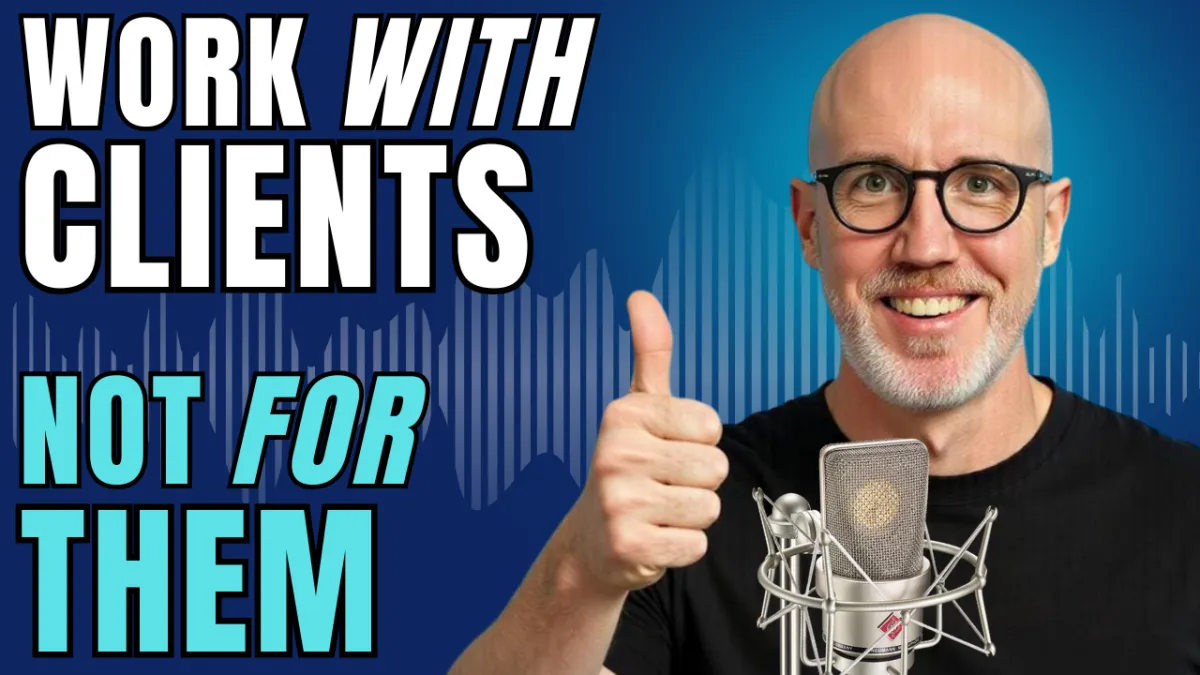
Get Repeat Voiceover Work
Get Repeat Voiceover Work
The Secret to Getting Voiceover Clients to Come Back Again and Again
A lot of voice actors think the key to getting more repeat clients is having:
More demos
Better microphones
A more expensive studio
More plugins and gear
And while those things can help, they’re usually not what keeps clients coming back.
What actually creates long-term clients is something much simpler:
Being easy to work with.
In fact, one small habit can instantly separate you from most voice actors — and even help you compete against AI.
The Simple Habit That Makes Clients Love Working With You
Here’s a quick rule you can start using immediately:
The next time you receive a script with a tiny typo or obvious mistake, just fix it and keep moving.
Don’t stop the project.
Don’t overthink it.
Don’t create unnecessary delays.
If you clearly know what the client meant, make the correction naturally and continue recording.
That one little habit instantly positions you differently from a lot of voice actors.
Because clients don’t just want someone who can read.
They want someone who can help solve problems.
Why “Easy to Work With” Beats Raw Talent
One of the biggest patterns among successful full-time voice actors is this:
They’re not only talented performers.
They’re smooth collaborators.
Clients remember:
Fast communication
Low friction
Reliability
Problem-solving
Professionalism
And when clients have a smooth experience working with you, they come back again and again for future projects.
That’s how long-term voiceover careers are built.
The Mistake That Makes You Replaceable
Many voice actors treat every project like a simple transaction:
Receive script
Record audio
Send files
Done
But that mindset makes you easy to replace.
Clients are usually looking for more than a human voice.
They want a collaborator.
Someone who can help improve the final product.
Especially now that AI voices are becoming more common, the ability to think critically, collaborate, and improve scripts has become even more valuable.
AI can read words.
But it can’t truly collaborate.
Don’t Be Afraid to Improve the Script
Some voice actors are terrified to touch a script in any way.
But if something sounds awkward, unnatural, or clearly incorrect, it’s okay to help improve it — as long as you communicate professionally.
For example:
Fixing an obvious typo
Correcting grammar
Adjusting phrasing to sound more conversational
Smoothing out awkward wording
These small improvements often make the final project sound significantly better.
And clients appreciate people who care about quality.
When to Fix It Yourself vs. When to Ask the Client
There’s an important balance here.
Small Issues? Just Fix Them
If it’s:
One typo
A missing word
Minor grammar
Something obviously unintended
Fix it and move on.
Then simply mention it when delivering the files.
For example:
“Hey, I noticed a small typo in paragraph two, so I corrected it while recording. No charge.”
That creates trust and professionalism.
Bigger Issues? Collaborate First
If the script needs:
Large rewrites
Major restructuring
Multiple corrections
Significant changes in meaning
Pause and reach out to the client.
That’s where collaboration becomes important.
Often clients are grateful you caught the issue before the project went live.
Stop Nickel-and-Diming Clients
One of the fastest ways to create friction is charging extra for every tiny adjustment.
Now, if the client completely rewrites the script after recording?
Absolutely charge for that.
But if it’s a tiny correction that takes five seconds to fix, constantly invoicing for every little thing can damage long-term relationships.
Clients remember how easy — or difficult — the process felt.
The smoother you make the experience, the more valuable you become.
Great Voice Actors Remove Friction
Going over and above for clients isn’t about working harder for free.
It’s about removing unnecessary friction from the process.
The best voice actors:
Solve small problems proactively
Communicate clearly
Make projects easier
Help clients feel supported
Deliver polished work efficiently
When you do that consistently, clients start viewing you as their go-to voice talent instead of just another freelancer.
A Simple Formula for Better Client Relationships
Here’s a practical approach you can start using immediately:
Step 1: Fix Small Mistakes Automatically
If the correction is obvious and minor, simply handle it.
Step 2: Mention It During Delivery
Let the client know professionally:
“I noticed a small typo and corrected it during recording.”
That reinforces your attention to detail.
Step 3: Know When to Pause
If the changes are substantial, stop and collaborate before moving forward.
Step 4: Avoid Overcharging
Save revision fees for meaningful rewrites, not tiny fixes.
How This Helps You Compete With AI
AI continues getting better at reading scripts.
But clients still value:
Judgment
Communication
Collaboration
Problem-solving
Creativity
Human intuition
That’s where real voice actors still have a huge advantage.
If you become someone who improves the process instead of simply reading words, you become much harder to replace.
Final Thoughts
You don’t necessarily need:
More gear
More plugins
More demos
More expensive equipment
To create repeat clients, you need to become easier and more enjoyable to work with.
The voice actors who build long-term careers are usually the ones who:
Communicate well
Remove friction
Solve problems
Think collaboratively
Care about the final product
So the next time you book a job, don’t just work for the client.
Work with the client.
That small shift can completely change how people view you — and how often they come back.
Ready to take the next step? I'm hosting a free 1-hour webinar this Tuesday night at 6:00 PM Pacific / 9:00 PM Eastern where I'll go deeper into everything it takes to start a voice acting career from home—including how to land your first gigs with little to no upfront cost. Plus, everyone who shows up gets a free copy of my book, The Voiceover Blueprint (audiobook and ebook). Sign up using this link.
Download My Latest Beginner Mistakes in Voice Over - Quick Start! https://thevoiceoverblueprint.com/beginner-mistakes
Discover the Voice Over Blueprint™: https://thevoiceoverblueprint.com/vobp
The content on this channel is for educational and informational purposes only. While I share tips, strategies, and guidance based on my experience as a professional voice actor, there is no guarantee of earning income or securing voiceover work by using the information provided. Results vary depending on individual effort, skill level, market conditions, and other factors. Viewers should use their own judgment and take personal responsibility for their voiceover career decisions.

Download my latest voice over resource guide...
Get My Latest Voice Over Tips, Tricks, and Insights You Can Use Right Now!
These no cost resource guides show you what working now in voice over.
Terms of Use. |. Disclaimer. |. Privacy Policy. |. Members Area. | Reviews | Refund Policy | Partners