

Voice Over Content Hub
Welcome to the content hub.
Beginner Voiceover Artists Make This Mistake and Never Recover
Beginner Voiceover Artists Make This Mistake and Never Recover
The Comparison Trap: Why Comparing Yourself to Other Voice Actors Is Holding You Back
If you're new to voice acting, chances are you've done it.
You listen to a national commercial, an audiobook narrator, or another voice actor's demo and immediately think:
"I'll never sound that good."
"My voice isn't nearly as polished."
"Maybe I just don't have what it takes."
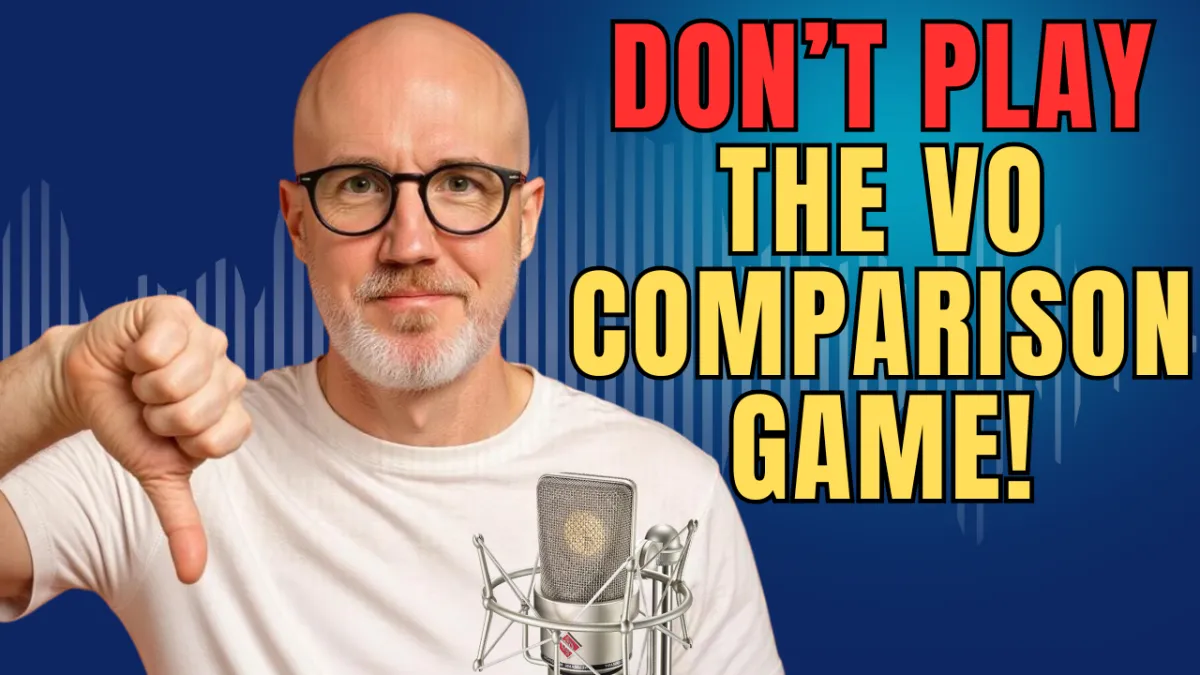
This is what I call the comparison game, and it's one of the fastest ways to destroy your confidence before your voiceover career even has a chance to get started.
The truth is, every professional voice actor you admire was once a beginner too.
The difference isn't that they were born with some magical voice.
The difference is that they invested time, coaching, experience, and consistent practice to get where they are today.
Let's talk about why comparing yourself to established voice actors is so damaging—and what you should be doing instead.
Every Professional Started Exactly Where You Are
One of the biggest mistakes new voice actors make is comparing their very first recordings to someone who's been working professionally for 10, 20, or even 30 years.
Think about that for a second.
You're comparing your Day One to someone else's Year Twenty.
Of course there's going to be a difference.
Professional voice actors have spent years:
Working with coaches
Receiving direction from clients
Recording thousands of auditions
Learning microphone technique
Refining their delivery
Developing their ear
You simply haven't had that time yet.
And that's okay.
Everyone starts somewhere.
Voiceover Isn't About Having the "Best" Voice
Here's something many beginners don't realize:
Voiceover isn't a competition to see who has the best voice.
It's about finding the right voice for a particular project.
That's a huge difference.
In voiceover, beauty truly is in the ear of the beholder.
Every Client Has a Voice in Their Head
Before many clients ever post an audition, they've already imagined what they want the finished project to sound like.
They may be looking for:
Warm and conversational
Friendly and approachable
Confident and authoritative
Young and energetic
Calm and reassuring
You could deliver a technically perfect audition with crystal-clear audio and flawless acting.
But if your natural voice doesn't match the sound they've already envisioned, you may not book the job.
That doesn't mean your audition wasn't good.
It simply means you weren't the voice they were looking for.
That's an important distinction.
Sometimes the "Perfect" Take Isn't the One the Client Chooses
Here's something that surprises many new voice actors.
The take you think is your best performance may not be the one your client prefers.
I've experienced this countless times during directed sessions.
A client might ask for three different versions of the same line:
Take A
Take B
Take C
In my mind, maybe Take A was the strongest.
But the client chooses Take B.
Why?
Because they're hearing the project differently than I am.
That happens all the time.
It's a great reminder that we're often our own harshest critics.
Self-Direction Is One of the Hardest Skills to Learn
Unlike many other creative professions, most voiceover work happens without a director sitting beside you.
Most of the time it's just:
You
Your microphone
Your recording software
That means you have to become your own director.
Learning to recognize:
When a read sounds natural
When you're overacting
When you're rushing
When you've nailed the performance
...takes time.
It's a skill that develops with experience.
Why Coaching Makes Such a Difference
One exercise I often do with beginning voice actors illustrates this perfectly.
I'll have a student read the same line multiple times.
After each take, they decide whether they're happy with it or whether they want another attempt.
Once they're finished, we'll listen back together.
Many times, the student believes their fifth take was the strongest.
But when we review everything objectively, we discover their second take actually felt the most natural.
Without outside feedback, they would have kept chasing "perfect" instead of recognizing they had already delivered a great performance.
That's why coaching is so valuable.
A trained coach helps calibrate your ear so you learn what clients are actually looking for—not just what sounds good to you.
Don't Waste Time Auditioning Without Feedback
One of the biggest reasons beginners become discouraged is that they start submitting auditions before they've developed the necessary skills.
When those auditions don't book, they naturally assume:
"Maybe I'm just not cut out for this."
In reality, they simply haven't received enough guidance yet.
Professional feedback helps you:
Improve faster
Avoid developing bad habits
Build confidence
Learn proper self-direction
Submit stronger auditions
That's a much better path than guessing your way through hundreds of auditions and wondering why nothing is sticking.
Focus on Progress, Not Comparison
Instead of asking:
"Am I as good as that professional voice actor?"
Ask yourself:
Am I better than I was last month?
Am I more confident than I was six months ago?
Is my recording quality improving?
Am I making stronger acting choices?
Those are the comparisons that actually matter.
Voiceover is a long-term skill.
Small improvements made consistently create dramatic results over time.
Confidence Is Part of Your Success
Confidence doesn't mean believing you're the best.
It means trusting that you're capable of improving.
Every successful voice actor once questioned themselves.
Every one of them wondered whether they were good enough.
The ones who succeeded didn't avoid those doubts.
They simply kept learning anyway.
Final Thoughts
The comparison game is one of the biggest momentum killers in voiceover.
It's easy to become discouraged when you compare yourself to professionals who have spent decades refining their craft.
But remember:
They started as beginners too.
They weren't born sounding the way they do today.
They developed those skills through training, coaching, experience, and persistence.
Instead of comparing yourself to where someone else is today, compare yourself to where you were yesterday.
Keep improving.
Keep learning.
Keep auditioning.
With the right training, consistent practice, and quality feedback, you'll continue growing as a voice actor—and one day, someone brand new to voiceover may be listening to your demo wondering how you got so good.
Ready to take the next step? I'm hosting a free 1-hour webinar this Tuesday night at 6:00 PM Pacific / 9:00 PM Eastern where I'll go deeper into everything it takes to start a voice acting career from home—including how to land your first gigs with little to no upfront cost. Plus, everyone who shows up gets a free copy of my book, The Voiceover Blueprint (audiobook and ebook). Sign up using this link.
Download My Latest Beginner Mistakes in Voice Over - Quick Start! https://thevoiceoverblueprint.com/beginner-mistakes
Discover the Voice Over Blueprint™: https://thevoiceoverblueprint.com/vobp
The content on this channel is for educational and informational purposes only. While I share tips, strategies, and guidance based on my experience as a professional voice actor, there is no guarantee of earning income or securing voiceover work by using the information provided. Results vary depending on individual effort, skill level, market conditions, and other factors. Viewers should use their own judgment and take personal responsibility for their voiceover career decisions.

Download my latest voice over resource guide...
Get My Latest Voice Over Tips, Tricks, and Insights You Can Use Right Now!
These no cost resource guides show you what working now in voice over.
Terms of Use. |. Disclaimer. |. Privacy Policy. |. Members Area. | Reviews | Refund Policy | Partners