

Voice Over Content Hub
Welcome to the content hub.
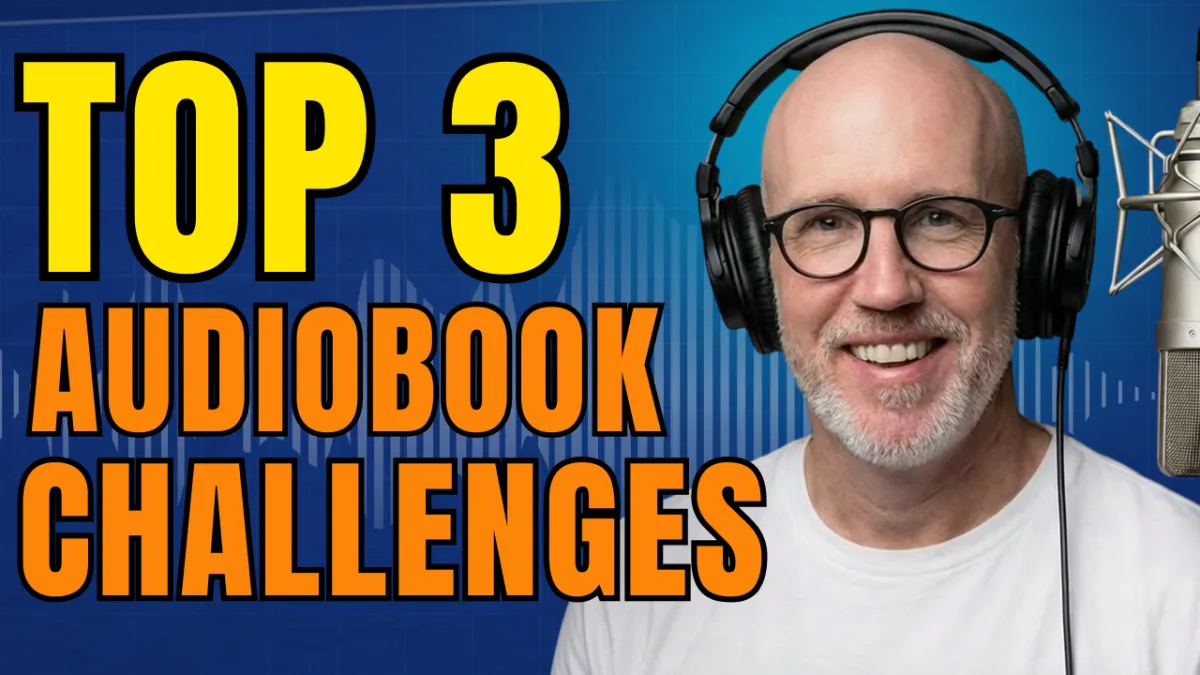
3 Biggest Challenges New Audiobook Narrators Face (Real Talk)
3 Biggest Challenges New Audiobook Narrators Face (Real Talk)
Thinking About Narrating Audiobooks? Here Are the 3 Biggest Challenges Every Beginner Should Know
Audiobooks are one of the fastest ways for new voice actors to start booking professional voiceover work. Unlike many commercial or animation jobs that require polished demos and years of experience, audiobook narration often gives beginners an opportunity to build experience while getting paid.
But don't let that fool you into thinking audiobooks are easy.
One of the biggest misconceptions about audiobook narration is that if you enjoy reading books, you'll automatically be good at narrating them. Unfortunately, that's rarely the case.
Many aspiring narrators step into the booth thinking they'll knock out a few chapters in an afternoon. A few hours later, they're mentally exhausted, their voice is wearing out, and they've barely made a dent in the project.
If you're considering getting into audiobook narration, here are the three biggest challenges you'll face—and how to overcome them.
1. Audiobook Narration Is Storytelling, Not Reading
The number one mistake I see new audiobook narrators make is treating the script like they're simply reading words off a page.
Anyone can read.
A professional audiobook narrator tells a story.
Whether you're narrating a fantasy novel, a business book, or a self-help guide, your job is to bring the author's words to life. The listener should feel like they're sitting beside someone sharing an engaging story—not listening to someone reading aloud.
That means understanding:
The author's intent
The emotional flow of the material
The pacing
The tone
The listener's experience
Avoid the Two Extremes
Most beginners fall into one of two traps.
Trap #1: Reading too flat.
Everything sounds the same. There's no emotion, no variation, and no connection with the listener.
Trap #2: Overacting every sentence.
Some narrators perform every line as if it's the most dramatic moment in the book. While that may seem energetic at first, it's exhausting to perform—and exhausting to listen to.
The goal is conversational storytelling.
You're not performing at the listener.
You're sitting beside them and guiding them through the book.
Fiction vs. Non-Fiction
If you're narrating fiction, you'll also need to differentiate between characters.
Notice I didn't say create completely different voices.
One of the biggest myths in audiobook narration is that every character needs a cartoon-like voice.
In reality, subtle vocal changes are usually all that's needed to help listeners distinguish who's speaking.
For non-fiction, the advice is even simpler:
Be yourself.
Skip the announcer voice. Skip the "radio voice." Just communicate naturally and authentically.
2. Audiobook Narration Is Physically Demanding
Most voiceover projects are relatively short.
Audiobooks are not.
You're often recording for hours at a time, and that requires stamina.
One of the biggest mistakes new narrators make is trying to push through long recording sessions without taking breaks.
Eventually:
Your voice gets tired.
Your concentration drops.
You begin making more mistakes.
Your pacing changes.
You start rushing because you simply want to finish.
Ironically, trying to work faster often slows you down because you'll spend more time fixing mistakes during editing.
Train Like a Marathon Runner
Think of audiobook narration the same way you'd think about running a marathon.
Nobody wakes up one morning and decides to run 26 miles without training.
Instead, they build endurance over time.
Do the same with audiobook narration.
Take regular breaks.
Stand up and stretch.
Drink water.
Reset your focus.
You'll sound better, stay healthier, and produce a much higher-quality recording.
Watch What You're Wearing
Here's a tip many beginners never think about.
Audiobooks are usually recorded completely dry—without music or sound effects.
That means your microphone hears everything.
Avoid:
Noisy jewelry
Jackets that rub together
Scratchy fabrics
Anything that creates unwanted noise
Small sounds become surprisingly noticeable in audiobook recordings.
3. Audiobooks Take Much Longer Than You Think
One of the biggest surprises for new narrators is realizing how much work happens after the recording stops.
Recording is only one part of the job.
You'll also spend time:
Editing
Removing mistakes
Checking audio quality
Processing files
Meeting ACX technical standards
Exporting and organizing chapters
A common rule of thumb in the audiobook industry is that it often takes three to four hours of work for every finished hour of audio.
For example:
A three-hour audiobook may require:
Three hours of recording
Several hours of editing
Proofing
File preparation
In many cases, that "three-hour" audiobook becomes a nine- to twelve-hour project.
Knowing this ahead of time helps you price projects appropriately and set realistic expectations.
Read the Book Before You Record
This may sound counterintuitive, but one of the biggest time-saving strategies is reading the entire book before you ever press Record.
Doing so allows you to:
Learn the story
Understand the pacing
Identify difficult pronunciations
Meet the characters
Anticipate emotional shifts
You'll make fewer mistakes and spend far less time stopping and restarting during recording.
The Most Successful Audiobook Narrators Love Books
At the end of the day, audiobook narration isn't simply about having a nice voice.
It's about enjoying the process of storytelling.
If sitting down and reading an entire book sounds miserable to you, audiobook narration may not be the best fit.
But if you genuinely love books, enjoy helping stories come alive, and are willing to build your skills over time, audiobooks can be one of the most rewarding and accessible areas of voiceover.
Final Thoughts
Every audiobook you narrate teaches you something.
You'll improve your pacing.
You'll build vocal endurance.
You'll become a stronger storyteller.
And with every finished project, you'll gain confidence and experience that carries over into every other area of voiceover.
Remember these three keys:
Focus on storytelling, not simply reading.
Build your stamina by taking breaks and protecting your voice.
Respect the time commitment and prepare before you record.
Audiobook narration is a marathon, not a sprint.
The narrators who succeed aren't necessarily the ones with the deepest voices or the fanciest equipment.
They're the ones who consistently show up, keep learning, and continue improving with every project.
Ready to take the next step? I'm hosting a free 1-hour webinar this Tuesday night at 6:00 PM Pacific / 9:00 PM Eastern where I'll go deeper into everything it takes to start a voice acting career from home—including how to land your first gigs with little to no upfront cost. Plus, everyone who shows up gets a free copy of my book, The Voiceover Blueprint (audiobook and ebook). Sign up using this link.
Download My Latest Beginner Mistakes in Voice Over - Quick Start! https://thevoiceoverblueprint.com/beginner-mistakes
Discover the Voice Over Blueprint™: https://thevoiceoverblueprint.com/vobp
The content on this channel is for educational and informational purposes only. While I share tips, strategies, and guidance based on my experience as a professional voice actor, there is no guarantee of earning income or securing voiceover work by using the information provided. Results vary depending on individual effort, skill level, market conditions, and other factors. Viewers should use their own judgment and take personal responsibility for their voiceover career decisions.

Download my latest voice over resource guide...
Get My Latest Voice Over Tips, Tricks, and Insights You Can Use Right Now!
These no cost resource guides show you what working now in voice over.
Terms of Use. |. Disclaimer. |. Privacy Policy. |. Members Area. | Reviews | Refund Policy | Partners